Read the budget and the map together
Construction cost is paid once. Hourly upkeep is the operating charge for one completed, enabled building, including the current service-cost multiplier. Fuel purchases, add-ons, delivery vehicles and debt are separate expenses. Use the city budget for the complete total.
Footprints are occupied grid tiles before rotation, not model dimensions. Leave additional room for road connections and expansion modules. Prices alone do not unlock a facility: check rank, department and prerequisite requirements in its build menu.
Images are previews rendered from BuildCity's in-game building models. Figures were checked against the game configuration for version 1.4.19.
Power, water and sewage
Wind and solar both occupy 3×4 tiles, but their base outputs are 200 and 300 kW respectively. Solar costs 1,000 more to build and 80 more per operating hour. Coal and oil also need fuel deliveries. Reserve a road-connected coastal site for each water or sewage facility; extra electrical capacity cannot replace either service.
| Facility | Build cost (§) | Operating upkeep (§/hour) | Footprint (tiles) |
|---|---|---|---|
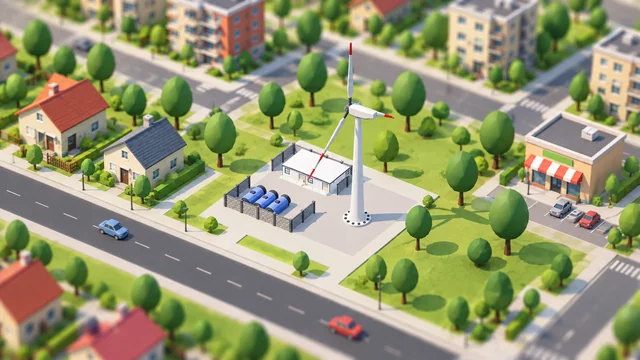 Wind Power Plant
|
3,000 | 120 | 3×4 |
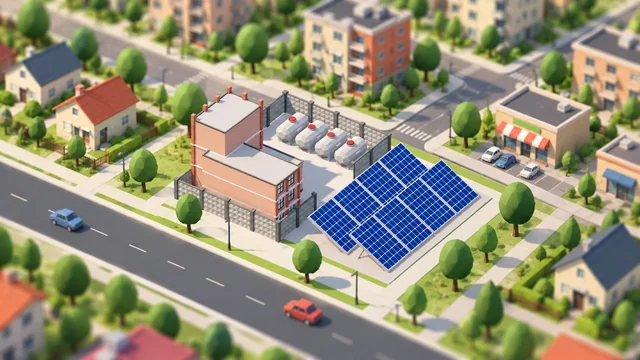 Solar Power Plant
|
4,000 | 200 | 3×4 |
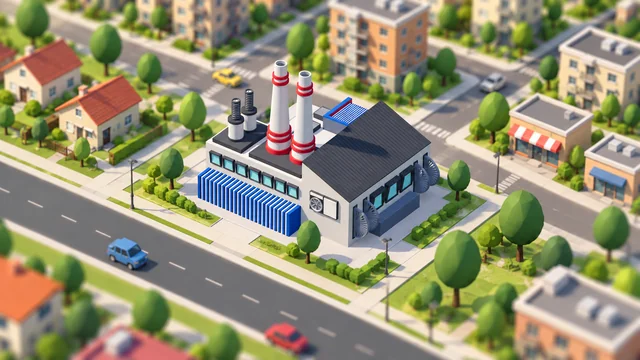 Coal Power Plant
|
5,000 | 320 | 3×3 |
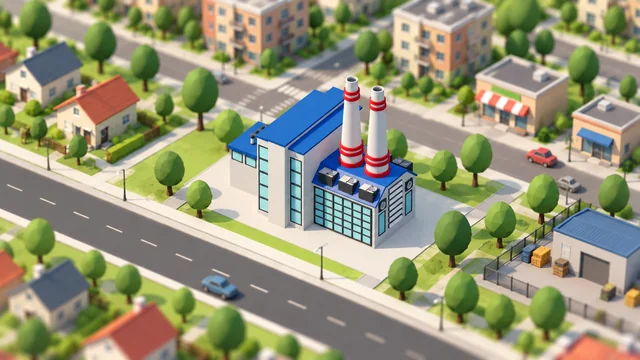 Oil Power Plant
|
6,000 | 320 | 3×2 |
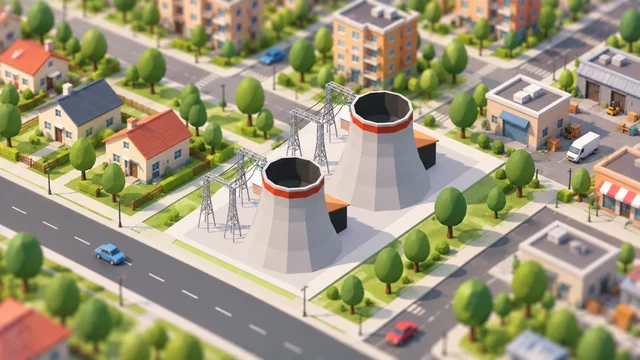 Nuclear Power Plant
|
30,000 | 2,000 | 10×5 |
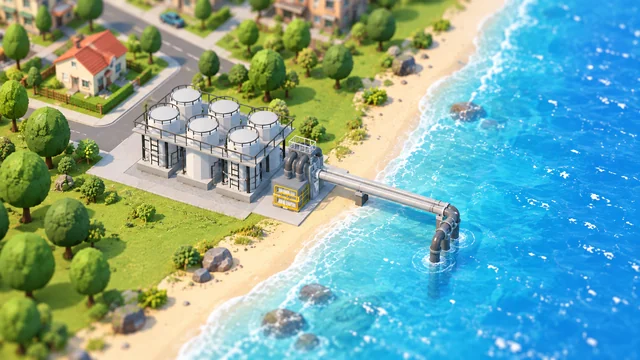 Coastal Water Pump
|
6,000 | 320 | 2×4 |
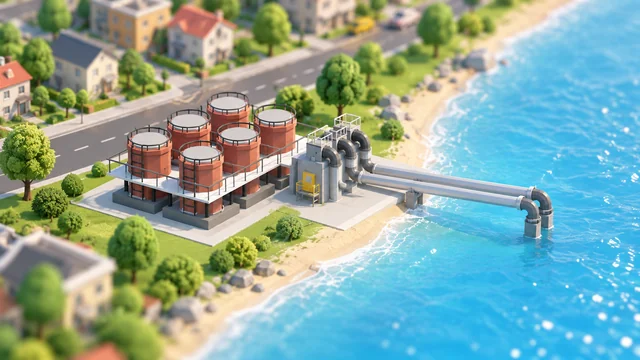 Wastewater Plant
|
8,000 | 400 | 2×4 |
Fire, police and healthcare
A large fire station and a large police station each cost the same as two of their small counterparts. Their 3×3 footprints use nine tiles instead of two separate 1×1 sites. Larger radius is useful when it reaches occupied districts; two small facilities can be easier to fit into separated neighborhoods. Compare the actual coverage overlay before choosing.
| Facility | Build cost (§) | Operating upkeep (§/hour) | Footprint (tiles) |
|---|---|---|---|
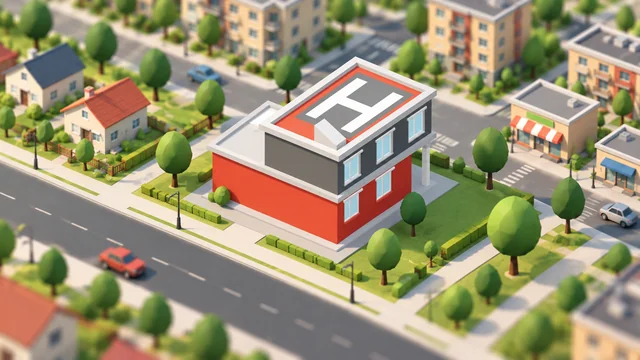 Local Fire Station
|
3,000 | 100 | 1×1 |
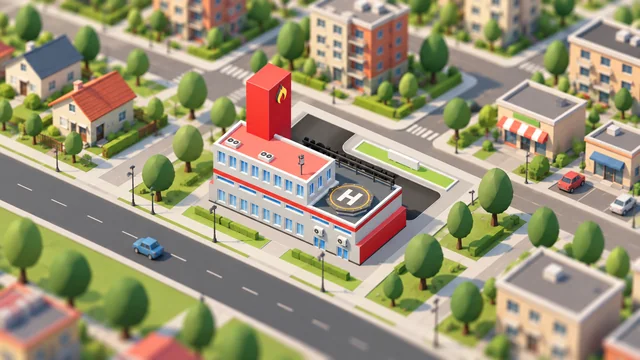 Large Fire Station
|
6,000 | 200 | 3×3 |
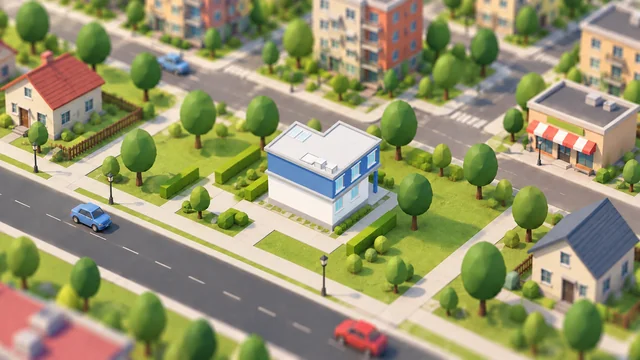 Small Police Station
|
3,000 | 120 | 1×1 |
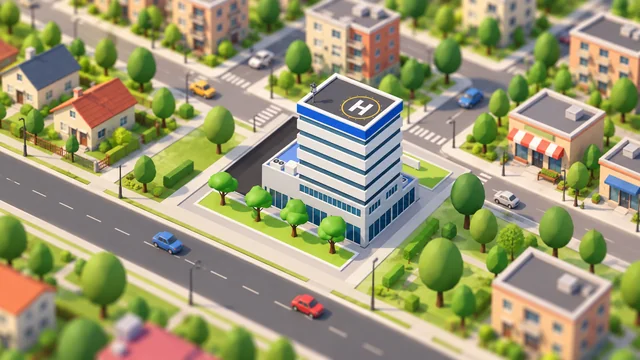 Large Police Station
|
6,000 | 240 | 3×3 |
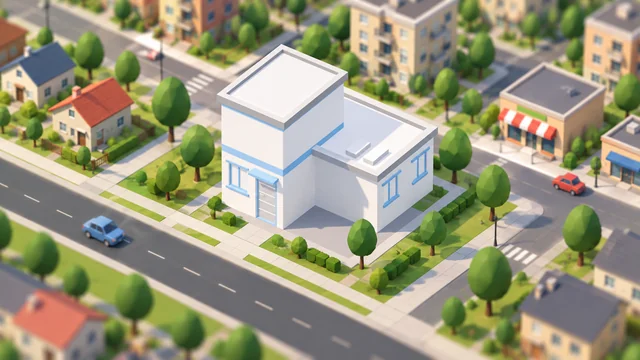 Local Hospital
|
6,000 | 200 | 1×1 |
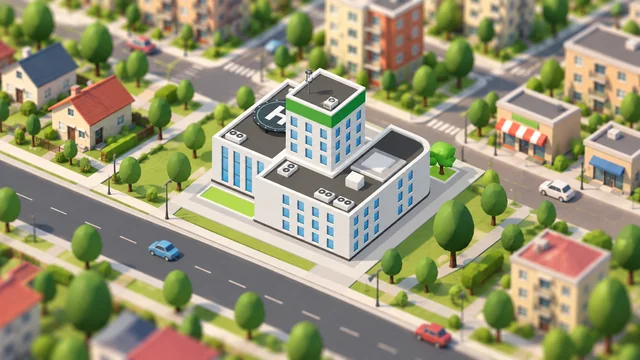 Large Hospital
|
12,000 | 400 | 3×3 |
Schools and education
A school bus stop is a road overlay, not a substitute for a school. It extends the reach of schools with a bus depot. Keep space beside schools for their expansion modules. The university supports higher education and progression, so it is a different decision from filling a local education gap with a library.
| Facility | Build cost (§) | Operating upkeep (§/hour) | Footprint (tiles) |
|---|---|---|---|
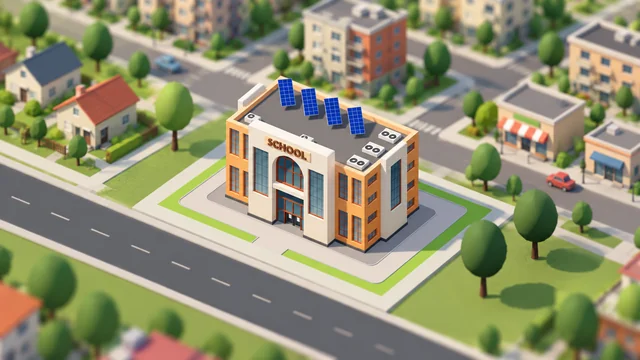 High School
|
6,000 | 200 | 3×2 |
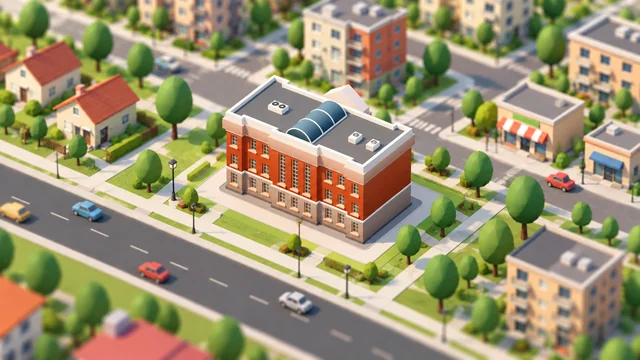 University
|
20,000 | 600 | 3×2 |
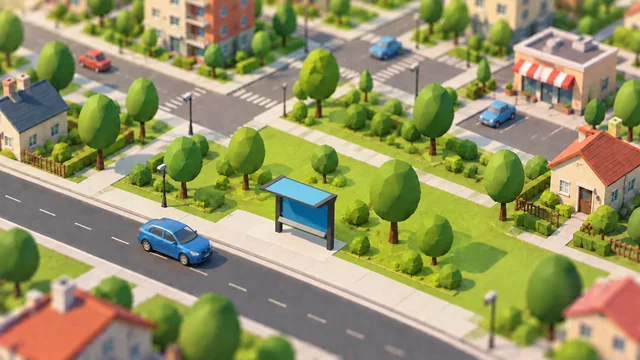 School Bus Stop
|
500 | — | On a road |
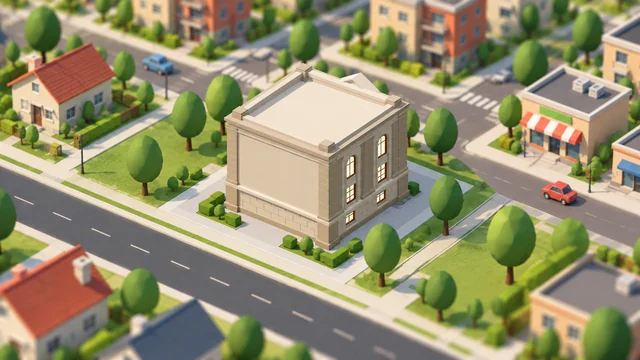 Library
|
8,000 | 160 | 2×2 |
The bus stop uses a separately managed road-overlay system; no hourly amount is stated for it in this table.
Parks and neighborhood facilities
The playground uses one tile and costs 800, while the small park uses four tiles and costs 1,000. Their hourly charges are 64 and 160. A soccer field needs an 18-tile site and 960 per hour, so test how much of its effect reaches existing homes before reserving that much budget. Parking and gas facilities have different effects on residential, commercial and industrial land value.
| Facility | Build cost (§) | Operating upkeep (§/hour) | Footprint (tiles) |
|---|---|---|---|
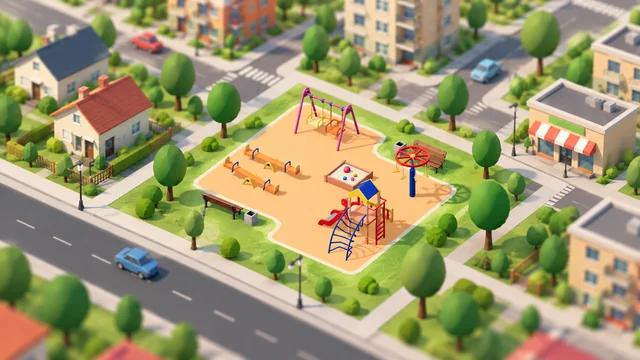 Playground
|
800 | 64 | 1×1 |
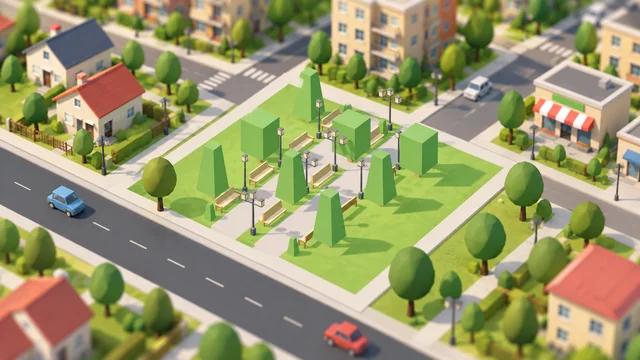 Small Park
|
1,000 | 160 | 2×2 |
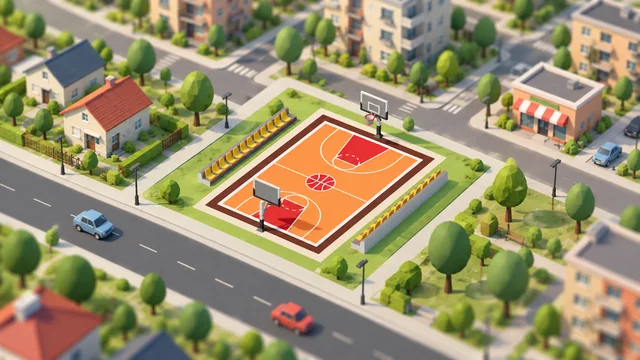 Basketball Court
|
2,500 | 280 | 3×3 |
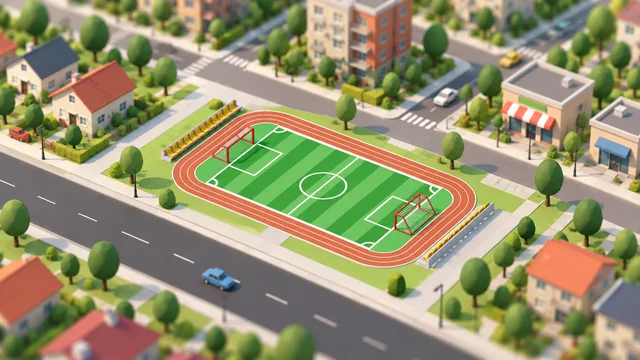 Soccer Field
|
6,500 | 960 | 6×3 |
 Asian Temple
|
5,000 | 60 | 2×2 |
 Presbyterian Church
|
5,000 | 60 | 2×3 |
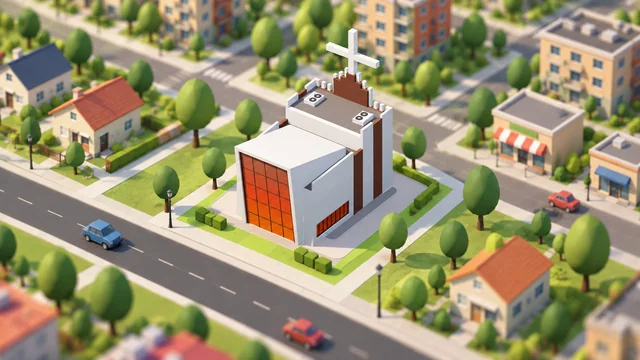 Modern Temple
|
5,000 | 60 | 2×2 |
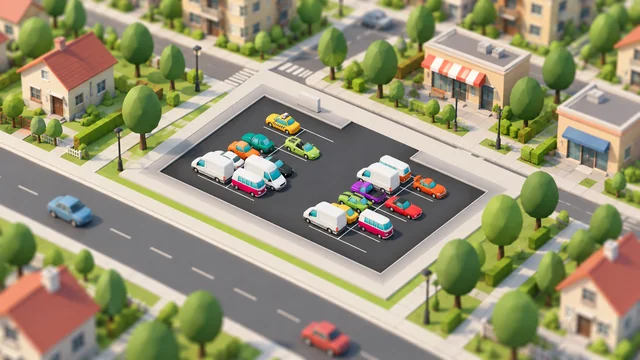 Small Parking Lot
|
3,500 | 50 | 3×2 |
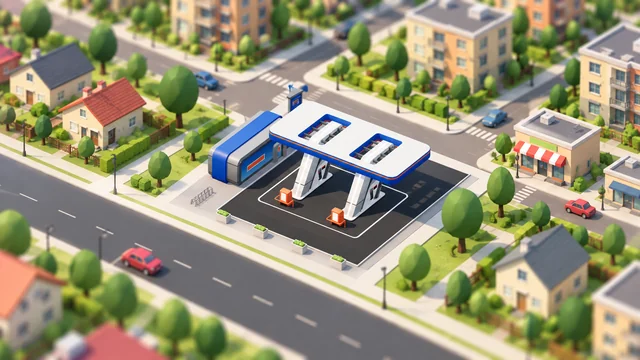 Gas Station
|
4,500 | 90 | 2×2 |
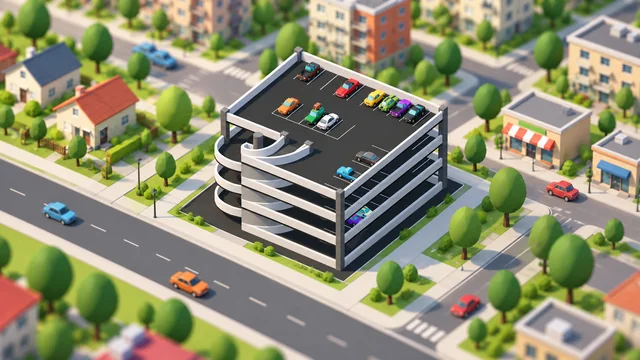 Parking Structure
|
9,000 | 140 | 4×4 |
Industry, trade and tourism
The refinery body stores resources; processing requires the appropriate production add-ons. Do not budget only for the body. A trade port occupies 9×6 coastal tiles, while a freight station occupies 4×2 tiles beside rail. Tourist attractions incur operating costs before visitor income can cover them; attractiveness is not a guaranteed profit.
| Facility | Build cost (§) | Operating upkeep (§/hour) | Footprint (tiles) |
|---|---|---|---|
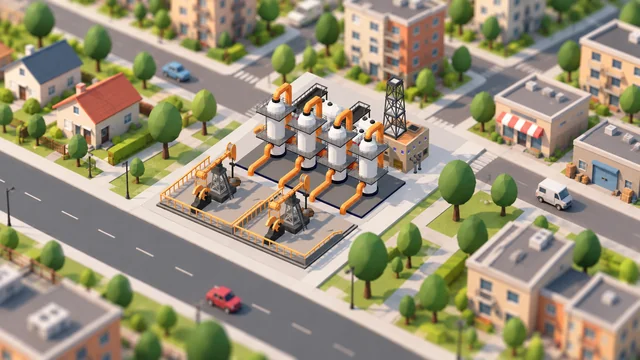 Oil Well
|
10,000 | 300 | 4×6 |
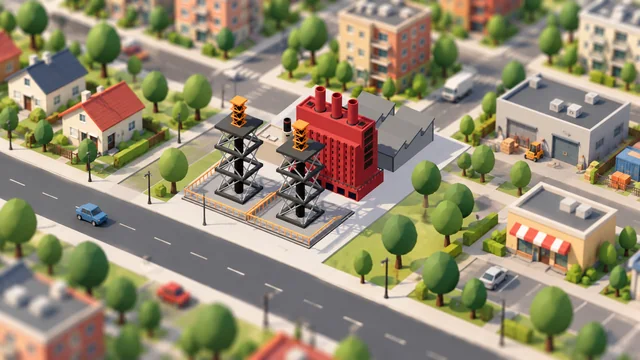 Coal Mine
|
8,000 | 240 | 4×6 |
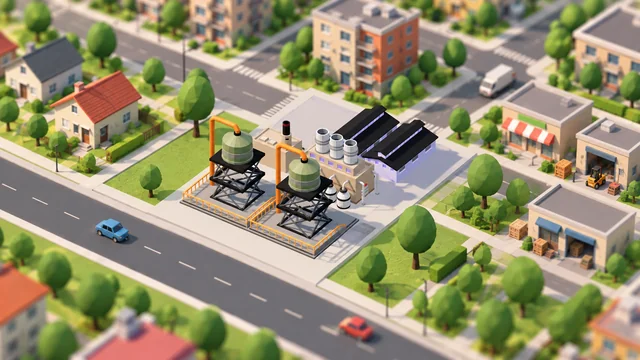 Mineral Mine
|
12,000 | 360 | 4×6 |
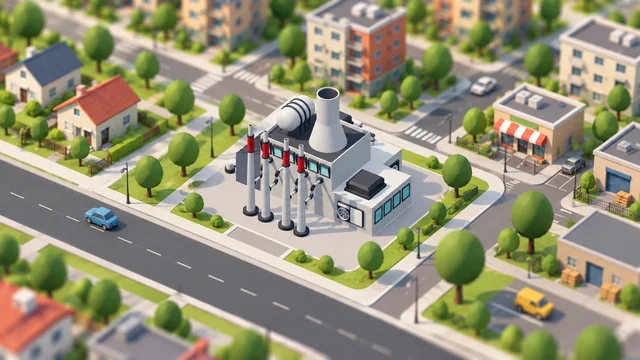 Smelter
|
30,000 | 400 | 4×4 |
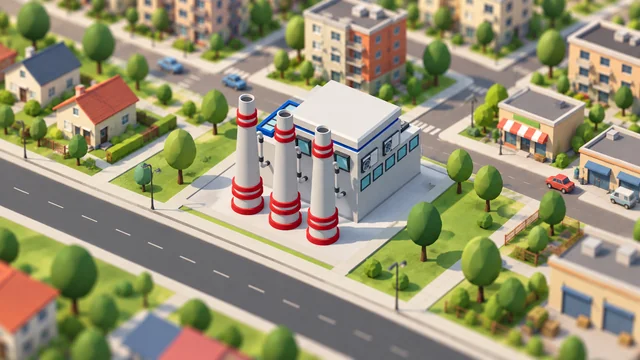 Oil Refinery
|
40,000 | 500 | 4×4 |
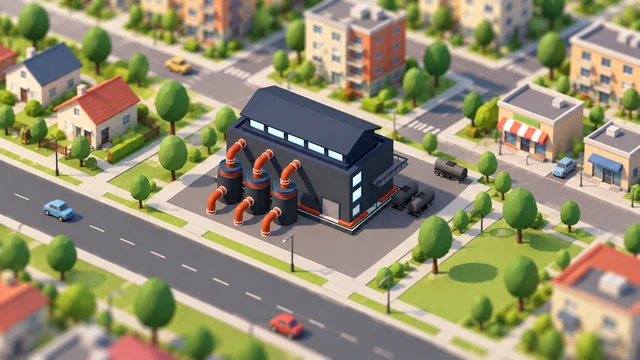 Trade Depot
|
15,000 | 400 | 3×3 |
 Trade Center
|
30,000 | 800 | 2×2 |
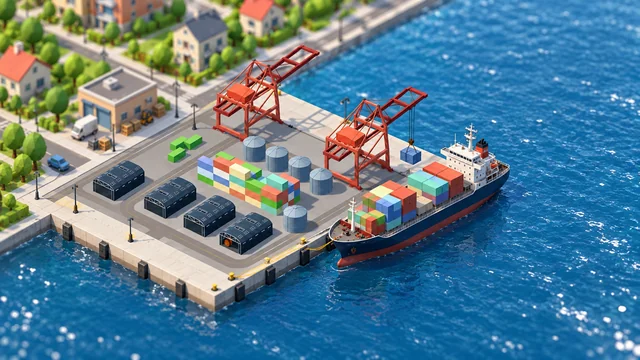 Trade Port
|
25,000 | 600 | 9×6 |
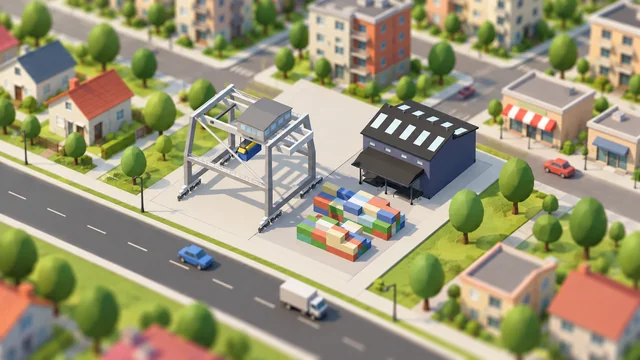 Freight Station
|
20,000 | 500 | 4×2 |
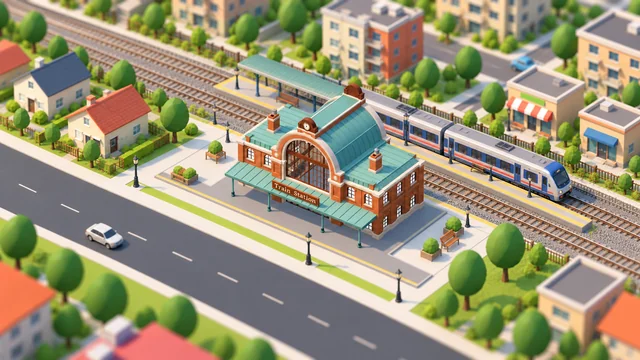 Train Station
|
35,000 | 800 | 3×7 |
 Tourism Bureau
|
30,000 | 600 | 2×2 |
 Spire
Spire
|
15,000 | 160 | 4×4 |
 Indian Temple
|
20,000 | 200 | 7×5 |
 Dolphin Show
|
35,000 | 400 | 4×4 |
 Golden Dome Cathedral
|
25,000 | 300 | 3×3 |
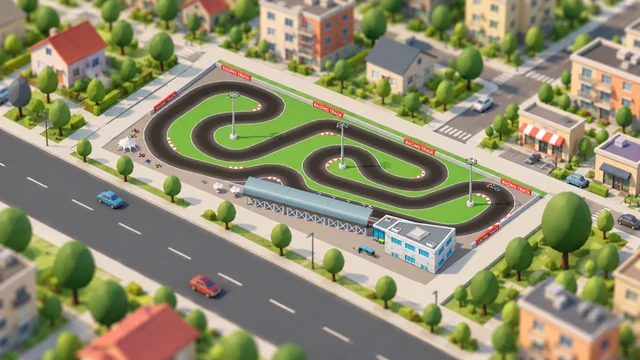 Racing Circuit
|
60,000 | 800 | 10×5 |
 Casino Association
|
50,000 | 1,500 | 3×3 |
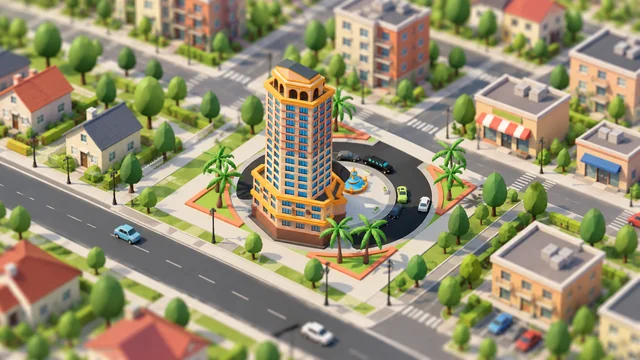 Casino
|
40,000 | 500 | 3×3 |
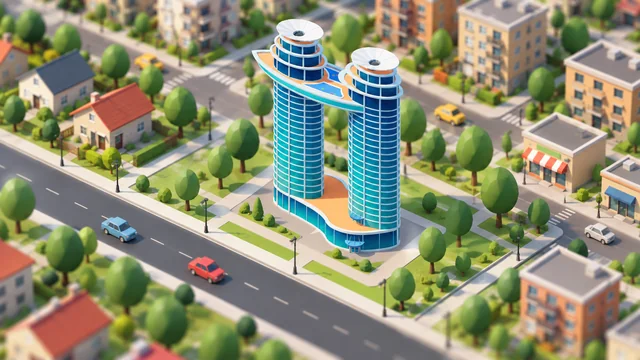 Hotel Casino
|
60,000 | 700 | 2×4 |
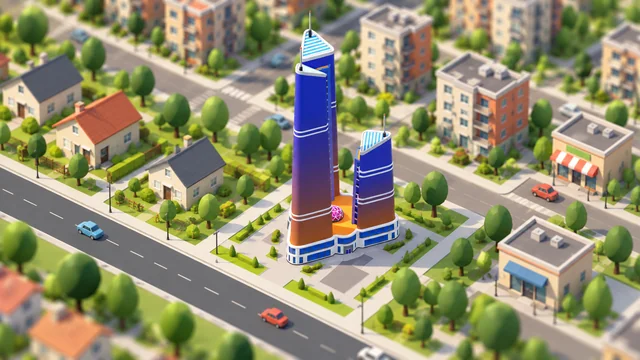 Luxury Casino
|
100,000 | 1,000 | 3×4 |
 City Hall
|
50,000 | 1,000 | 3×3 |
Worked decision: two small sites or one large service?
Two small fire stations cost 6,000 and 200 per hour together. One large fire station also costs 6,000 and 200 per hour. Fire coverage radius rises from 8 to 16 tiles for the large variant. The financial totals are equal before add-ons; the placement trade-off is not.
For two distant neighborhoods, first preview a small station inside each developed area. For adjoining districts, preview a large station near their shared road corridor. Compare the occupied buildings inside the overlay, the road connection and the nine-tile site. Do not count empty expansion land as current coverage value.
Apply the same comparison separately to police and health. Two small police stations cost 6,000 and 240 per hour; one large station has those same costs. Two local hospitals cost 12,000 and 400 per hour; one large hospital matches them. Hospital radii are 12 and 24 tiles, unlike the 8 and 16 for fire and police. One service does not replace another.
Before confirming construction
Check the affected buildings' warning icons, inspect the relevant coverage or utility overlay, and read the hourly balance. Fix a broken road before buying more capacity. Then reserve the building footprint and any future module space. Use the trial city to inspect placement without committing a saved city's budget.
The playable trial is for signed-out visitors. If you are signed in, this link opens your profile.